Author:AronDate:2026-2-6
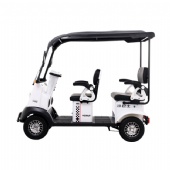
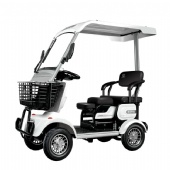
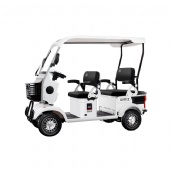
Let's analyze the reasons for fuse blowouts on HKBG golf carts.
The causes can be categorized into two types: overload and short circuit. The former is often
intermittent, while the latter is a high-frequency fault that requires prompt troubleshooting.
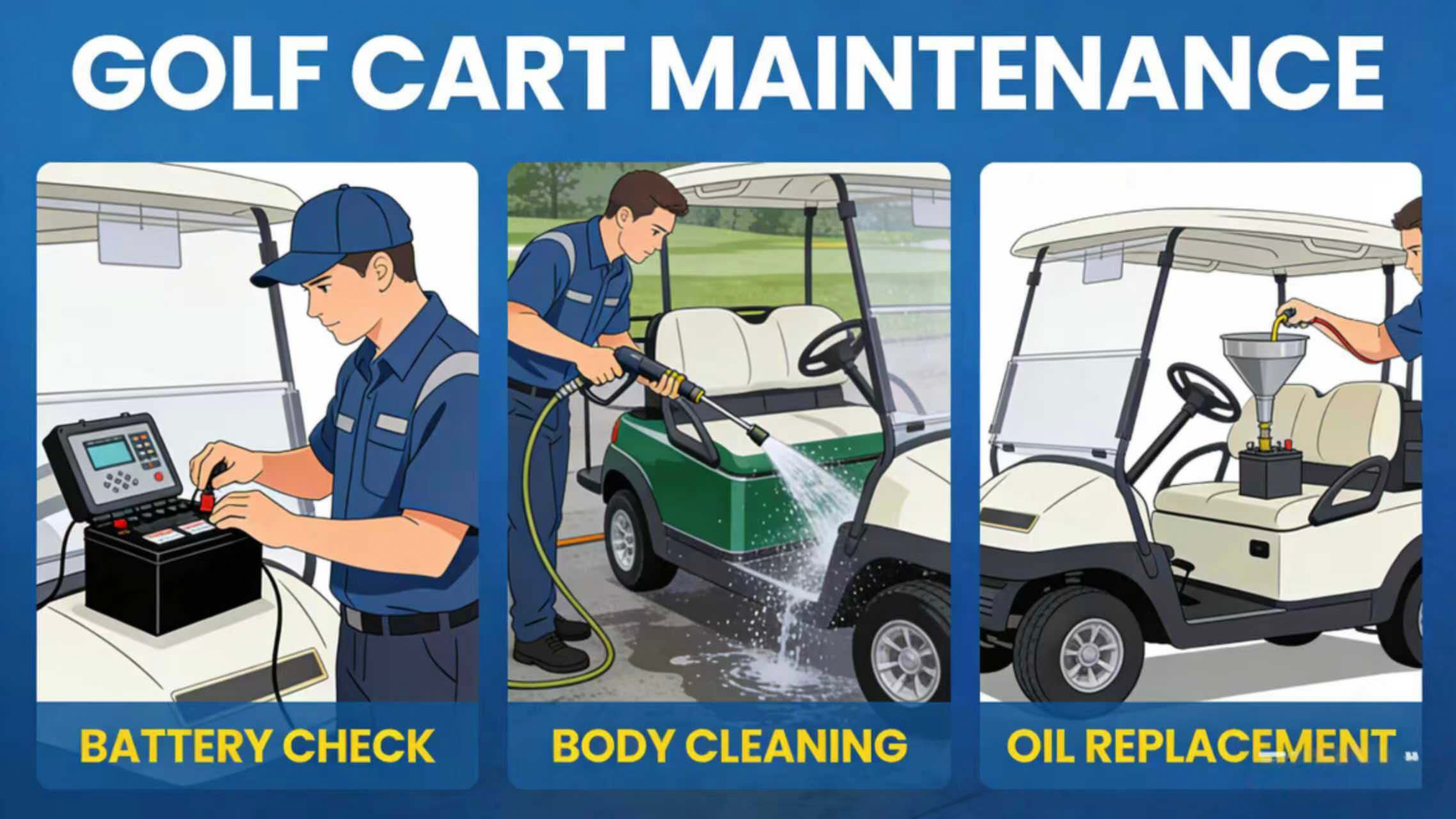
Common specific causes are as follows:
1. Short circuit (most common): Bumps in the vehicle cause wear and tear on the wiring insulation,
loose connections leading to grounding, or water or dust entering the battery compartment/chassis
wiring causing contact between the positive and negative terminals, resulting in a sudden large
current and blowing the fuse.
2. Electrical equipment malfunction: Internal short circuits in components such as lights, horn,
charger, and motor directly lower the circuit resistance during operation, triggering fuse protection.
3. Overload: Adding high-power accessories (such as spotlights or fast chargers) exceeds the rated
current of the original fuse, causing it to blow after prolonged operation.
4. Fuse/contact issues: Replacing the fuse with one that has too low an amperage rating, or
oxidation or poor contact in the fuse box socket, resulting in high temperature and fuse blowout.
5. Battery Abnormalities: Unstable battery pack voltage or single-cell failure can cause current
fluctuations during power supply, leading to accidental fuse blowouts.
⚠️ Tip: A single fuse blowout can be tested by replacing it with a fuse of the same specification.
Two or more consecutive blowouts indicate a short circuit/equipment malfunction.
Do not blindly replace with a high-amperage fuse, as this will damage the wiring and core
components.

To avoid golf cart fuse blowouts, the key is to reduce circuit overload, prevent short circuits,
and perform regular maintenance. These points are highly practical and can prevent problems
at their source. Specific practices are as follows:
1. Prevent circuit overload: Do not install spotlights, fast chargers, high-power audio systems, etc.
The original vehicle circuit design matches a fixed power; additional components will continuously
exceed the current and blow fuses. If such installations are necessary, have a professional redesign
the circuit and select separate fuses.
2. Prevent short circuits: Regularly inspect the wiring in the center console, seat sides, battery
compartment, and chassis, paying particular attention to insulation wear and loose connections.
Wrap any damaged wiring with insulating tape and tighten any loose connections. Drive at low
speeds in rainy or flooded areas to prevent water from entering the battery compartment and
wiring connections.
3. Replace fuses correctly: Replace blown fuses with genuine fuses of the same amperage rating.
Do not replace with larger amperage fuses to prevent them from blowing completely, as this will
result in loss of protection and damage to wiring, motors, and other core components.
4. Perform routine basic maintenance: Regularly clean the inside of the fuse box, removing oxide
layers and dust to ensure good conductivity at the contacts. Inspect the battery pack to ensure
that individual cells are not bulging, terminals are not oxidized, and voltage is stable to reduce
current fluctuations.
5. Avoid improper operation: Use the original charger that matches the vehicle when charging;
do not use other types of chargers. Do not operate all electrical devices simultaneously for
extended periods (lights + horn + wipers, etc.) to reduce instantaneous current load.
Thank you for reading.
Please follow us on TikTok (@hkbg.ev.car) for more information on golf cart usage and maintenance!
↓Next [ New Large-Screen EV Charger to Launch Soon – Starting at Just $1,200, Redefining Smart Charging Experience ]